How to Store Oversized Campaign Game Boxes on Kallax Shelves
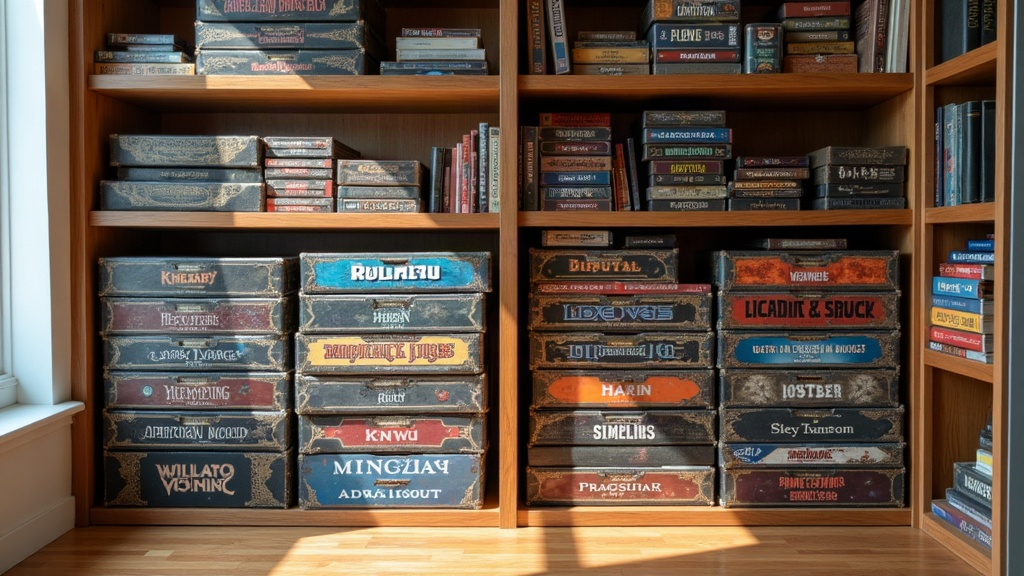
Storing Oversized Campaign Game Boxes on IKEA Kallax (Gloomhaven, Frosthaven, Kingdom Death, and More)
If you collect legacy and campaign games, you already know the headache. Boxes like Gloomhaven, Frosthaven, Kingdom Death: Monster, or Sleeping Gods just don’t play by the same rules as a standard board game box. They’re bigger, heavier, and packed with inserts that were never designed to survive years of being tipped on their side.
Here’s the good news: with the right setup, you can still store these monsters vertically on standard IKEA Kallax shelves. Done right, it saves space, protects your components, and keeps your whole collection easy to scan at a glance.
Why Vertical Storage Makes Sense for Campaign Games
Storing games vertically, spine-out like books, is simply the most efficient way to use a Kallax cube. Each cube runs roughly 13” x 13” x 15” (33 x 33 x 39 cm), which is plenty of room for most games to stand on their side.
The trouble starts with oversized campaign boxes. Some are too tall. Some are too deep. Some are so loaded with expansions and plastic inserts that standing them up risks bulging lids or crushed components inside. Gloomhaven owners know this pain well.
What you want is a system that:
- Keeps the box intact and the spine visible, so you can actually find things
- Stops miniatures, tokens, and cardboard from shifting or getting crushed
- Uses cube space efficiently instead of wasting height
- Keeps heavy expansions within reach without constant repacking
Step 1: Measure Before You Organize
Before you buy a single piece of foam board, grab a tape measure. Check the actual interior depth of your Kallax cube (not the exterior dimensions printed on the box) and compare it to the longest edge of your game box. Skip this step and you’ll end up with something that almost fits, which is worse than not fitting at all.
Most campaign boxes land in one of three categories:
- Tall but narrow (Gloomhaven, roughly 22” long). These need to lie on their side unless your cube happens to be unusually deep, and a standard Kallax typically isn’t.
- Wide and heavy (Kingdom Death: Monster). These usually deserve their own dedicated cube, laid flat, because of the weight and the fragile resin-friendly inserts inside.
- Standard oversized (Sleeping Gods, Nemesis). These can often stand vertically with just a bit of reinforcement.
Step 2: Reinforce the Box Structure
Cardboard wasn’t built to carry its own weight vertically for years on end. Leave it unsupported and the lid will eventually warp, bow, or split at the seams. A few fixes:
- Add corner bracing. Cut thin plastic sheets or foam board to fit inside the lid corners. This gives the box an internal skeleton instead of relying on cardboard alone.
- Use rubber bands or box straps. Wrap them around the width to stop the lid from bowing outward under its own gravity. Sounds crude, works great.
- Insert a divider between the lid and base if your box uses a telescoping lid design. Without it, the bottom slowly slides out over months, and one day you’ll find your Frosthaven box gaping open on the shelf.
Step 3: Rebuild the Interior with Modular Inserts
Here’s the part people underestimate: the real crushing risk comes from inside the box, not from outside pressure. The moment you flip a box vertical, every loose component shifts and piles weight on whatever happens to settle at the bottom. That’s how minis end up bent and card corners get dinged.
- Swap out flimsy plastic trays for foam core or coroplast dividers, custom-cut to match the box’s footprint.
- Group components into zip-lock bags by type (miniatures, cards, tokens) and pack them tightly enough that nothing has room to slide around.
- For card-heavy games, store decks upright in small card boxes nested inside the main box, rather than leaving loose stacks that fan out sideways the second you tilt the lid.
Step 4: Use Kallax Inserts for Extra Support
A trick a lot of collectors never think of: add a thin wood or acrylic divider inside the cube itself, positioned vertically, splitting one cube into two narrower slots. Instead of standing free, your oversized box can lean against something solid. This one small change cuts down lid bulge dramatically over time, and it costs maybe $10 in materials from a hardware store.
Step 5: Organize by Access Frequency, Not Just Size
Think about how often you actually touch each box. Campaign games you’re currently playing belong in a lower cube, around eye or waist level, since you’ll be pulling them out every game night. Finished or shelved campaigns can live higher up where you won’t need to reach for them as often.
A simple labeling system goes a long way here, too. Color-coded tape on the spine, or printed labels listing what expansions live inside, saves you from digging through five boxes at 8pm trying to find the right one before friends arrive.
Quick Troubleshooting Table
| Problem | Solution |
|---|---|
| Lid bulges after a few months | Add foam board divider between lid and base |
| Box won’t stand upright alone | Use a Kallax shelf divider for lateral support |
| Components shift and crush | Rebuild interior with foam core cells |
| Box is too deep for the cube | Store flat in a dedicated cube instead of vertical |
Conclusion
Oversized campaign boxes don’t have to wreck your Kallax setup. Measure accurately, reinforce the structure, and rethink how the interior is packed, and you can stand even monsters like Gloomhaven or Kingdom Death: Monster up on the shelf without worrying about crushed minis or bowed lids. Your shelves stay tidy, your components stay safe, and your next game night is one arm’s reach away instead of a twenty-minute excavation project.